
Near the end of the regular season, Ducks’ General Manger Pat Verbeek specifically mentioned targeting two types of players he wanted to acquire this offseason: a right-shot top six forward, and a right-shot top four defenseman.
Today, I will be tackling the forward part of Verbeek’s plan by diving into my favorite options from the pool of players who will likely be available this offseason. (Note: Players are listed in alphabetical order by last name in each category)
Top Choices:
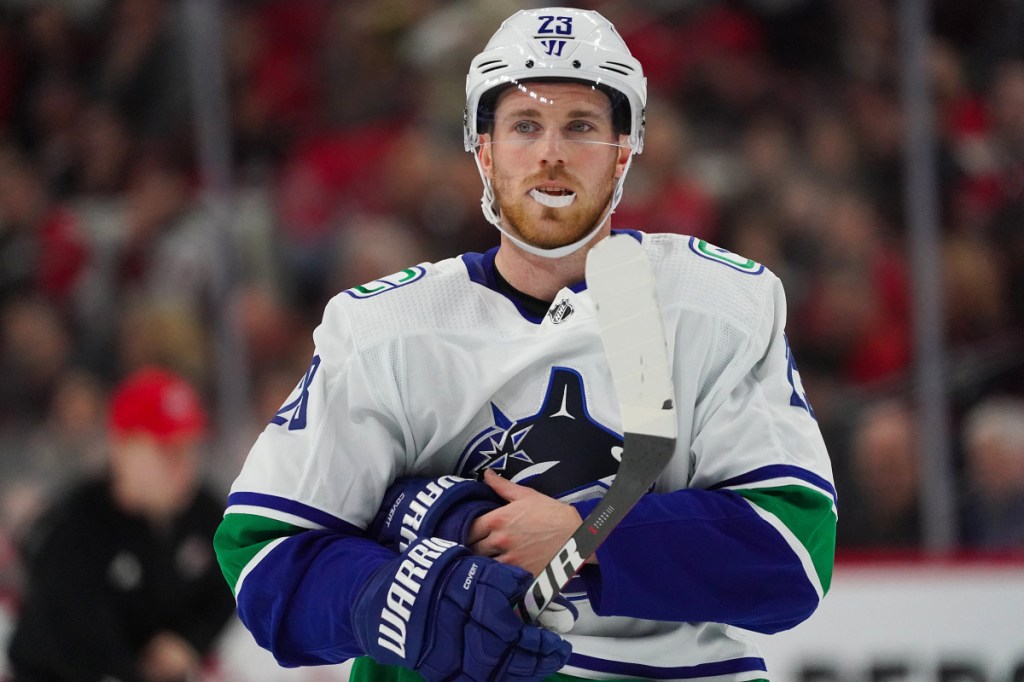
C/RW Elias Lindholm – 29 years old, 6’1” 195 lbs (UFA)
2023-24 Regular Season Stats: 75 GP, 15 G, 29 A
Player Overview:
Elias Lindholm is an average sized, right-handed center and winger. He is a two-way forward with finishing ability who can play in all situations. His faceoff prowess and defensive acumen make him a valuable contributor to both special teams’ units. He isn’t particularly fast, but he is a solid skater who also does not shy away from physical contact, adding to his two-way ability.
Player Analysis:
Lindholm’s stock has been volatile over the past few years. After his 40-goal season with Calgary in 2021-22, he was probably looking at a long-term deal around $9M per year. However, the departures of Matthew Tkachuk and Johnny Gaudreau negatively impacted Lindholm’s numbers over the rest of his time in Calgary and, subsequently, Vancouver (22 goals in 2022-23 and 15 goals in 2023-24). Calgary traded Lindholm to Vancouver right before the 2024 NHL All-Star Game, but Lindholm did not seem to fit in right away with the Canucks, so much so that there were rumors around the trade deadline that Vancouver might flip Lindholm somewhere else to recoup some value and look for a better fit. Ultimately, no deal came to fruition, and they held on to him for the rest of the season.
Fortunately for Vancouver, Lindholm showed his value in the playoffs. While he only controlled about 45% of shot attempts and 49% of expected goals at even strength, it is important to note who he matched up against in those minutes. His most common opposition in the first round was Nashville’s effective top line of Ryan O’Reilly, Filip Forsberg, and Gustav Nyquist. Against Edmonton, Lindholm played his most minutes against Evander Kane, Ryan Nugent-Hopkins, Leon Draisaitl, and Connor McDavid. And even though his opponents controlled more of the play at even strength, Lindholm had an even or positive goal differential against each of the players I listed. Part of this could be driven by shooting luck and goaltending, but it is still an impressive feat to outscore those players in the playoffs. Lindholm also took a big role on Vancouver’s penalty kill, in part because of his prowess in the faceoff dot, where he finished with a 51% success rate, often going against O’Reilly and Draisaitl, who are both fantastic at winning draws. Lindholm finished the playoffs with 5 goals and 5 assists in 13 games, good enough for third on his team, and he even showed some physicality, which I did not realize he had in his game.
The Fit:
With Leo Carlsson, Cutter Gauthier, Mason McTavish, Trevor Zegras, and Troy Terry, the Ducks have an impressive stable of young, offensively talented forwards. Elias Lindholm would represent an excellent complementary piece that can fit at center or right wing on any scoring line the Ducks put together. Lindholm has had success playing in front of the net and in the slot on the powerplay, an area where the Ducks need to improve. While I wouldn’t consider Lindholm an offensive dynamo, he has enough skill and smarts to play with the high-end Ducks forwards.
Lindholm’s two-way ability would be a bonus to the Ducks roster. After trading Adam Henrique and Sam Carrick to the Oilers, the Ducks’ faceoff numbers took a hit, which likely had an impact on the decline of the team’s penalty kill. Lindholm won 56% percent of faceoffs in the regular season, putting him in an elite tier in that category. Anaheim’s young centers will improve on the dot over time, but Lindholm can help take some pressure off them. It is also important to note that none of the Ducks’ young centers are right-handed, making faceoffs on the right side of the ice more challenging to win. For example, if Lindholm were playing on McTavish’s wing, McTavish could take the faceoffs on his strong side (the left side of the ice), while Lindholm could take the faceoffs on the other side. On the penalty kill, Lindholm’s strong side would match up with the strong side of the top left-handed centers in the league, like Leon Draisaitl or Aleksander Barkov, giving the Ducks a better chance of gaining possession off the draw and clearing the zone. Overall, Lindholm’s defensive ability would provide a security blanket for the Ducks’ young forwards, and his offensive ability is strong enough to not sacrifice goals on the other end of the ice.
My Offer: 6 years, $6-6.5M per year
It sounds like Lindholm is looking for more than what I would offer him. Part of that is likely because other teams (and likely Lindholm, himself) view him as a top six center, and those spots are spoken for on the Ducks (Carlsson, McTavish, Zegras, and Gauthier are all candidates that could fit in those two spots). Lindholm would likely get pushed to the wing in Anaheim, even though he would also probably be responsible for taking a lot of faceoffs in all situations. I could see Lindholm getting 7 years at around $7M, but I would just not be comfortable going that far for him.

RW/LW Jonathan Marchessault – 33 years old, 5’9” 180 lbs (UFA)
2023-24 Regular Season Stats: 82 GP, 42 G, 27 A
Player Overview:
Jonathan Marchessault is a diminutive scoring winger who plays bigger than his size. He is volume shooter that can score from range, but he is also not afraid to go to the crease and score from in tight. He is known to be a bit of a pest, and he’s willing to mix it up with opponents at times. Marchessault is a smart offensive player who can be a great complementary piece on a top line.
Player Analysis:
Jonathan Marchessault went undrafted and did not become a full-time NHL player until age 26, when he scored thirty goals in his first season with the Florida Panthers. Florida then shipped him off to Vegas as part of an expansion draft trade. Marchessault took Vegas’ “Golden Misfits” moniker to heart, and he quickly became a regular offensive contributor for the new franchise. During his seven-year tenure with Vegas, Marchessault averaged over 30 goals per 82 games, capped off with an impressive 42 goals in 2023-24. Despite his age, Marchessault’s stock has arguably never been higher as he enters free agency.
Marchessault’s calling card is his offensive skill, particularly his shot and his willingness to shoot the puck. Marchessault took 266 shots on goal last season (3.24 shots per game), good enough for 24th most in the NHL. For some more context, Frank Vatrano led the Ducks with 272 shots on goal last season, and the next closest on the team was Troy Terry, who had 100 fewer shots than Vatrano at 172. Machessault spent most of his even strength minutes with Ivan Barbashev and Jack Eichel on the top line for the Golden Knights. The Marchessault-Eichel combo was very successful, controlling 53% of expected goals at 5 on 5. Eichel’s ability to hold onto the puck and distribute it to his linemates gave Marchessault room to shine. Ideally, if you are signing him, you would try to put him with a player like Eichel (Leo Carlsson?) to try and replicate that chemistry.
Over his time in Vegas, Marchessault stood out as one of their top playoff performers. In six playoff appearances with Vegas, Marchessault played 95 games, totaling 36 goals and 39 assists. Of course, his crowning achievement as a Golden Knight came in the 2023 playoffs where he finished with 13 goals and 12 assists in 22 games, earning himself the Conn Smythe Trophy as the top playoff performer that year. Even though Vegas bowed out in the first round of the 2024 playoffs, Marchessault still stood out on Vegas, having the best 5 on 5 shot share and expected goal share on his team. He also led the team with 25 shots on goal in seven games. Marchessault is a battle-tested, shoot-first offensive weapon that can be a real asset to any team looking for more firepower at the top of their lineup.
The Fit:
Marchessault’s offensive talents would be a welcomed addition to the Ducks’ lineup. Outside of Frank Vatrano, the Ducks don’t really have any dangerous shoot-first players (Cutter Gauthier could also fit that mold, but we haven’t seen enough of him yet to be sure). Marchessault could benefit from playing next to Leo Carlsson or Trevor Zegras, two players who have great vision and passing ability. However, it is important to note that Marchessault isn’t known to be a great defensive player, so he will either need to be on a sheltered line, or paired with forwards who can do the heavy lifting in his own zone. The Ducks have some talented offensive players, but they could really use another player who isn’t afraid to shoot the puck.
One area that could use Marchessault’s talents would be the Ducks’ powerplay. Marchessault’s 17 powerplay points last season would have ranked third on the Ducks behind Vatrano and Cam Fowler. While both Marchessault and Vatrano fill similar roles on the powerplay, they could each thrive on their own units. Troy Terry and Ryan Strome are the only right-handed players the Ducks have who play on the powerplay, but neither of them has made a huge impact on the Ducks man advantage. As a righty, Marchessault could create some different looks on the powerplay, especially as a one-timer threat taking feeds from the Ducks’ left-handed playmakers. Overall, Marchessault’s skills would mesh well with what the Ducks currently have, and he would give more teeth to an already skilled offensive roster.
My Offer: 3 years, $6-7M per year
Marchessault’s first choice seems to be Vegas, but there is a definite possibility that Vegas chooses to use its precious cap space elsewhere. Assuming Vegas cannot retain Marchessault, I imagine that he would get plenty of one or two year offers, but three- or four-year offers may be tough to come by given his age. If he were to ask for a four-year deal, I would reduce the money to around $5M per year, but I would strongly prefer a two- or three-year contract for Marchessault.
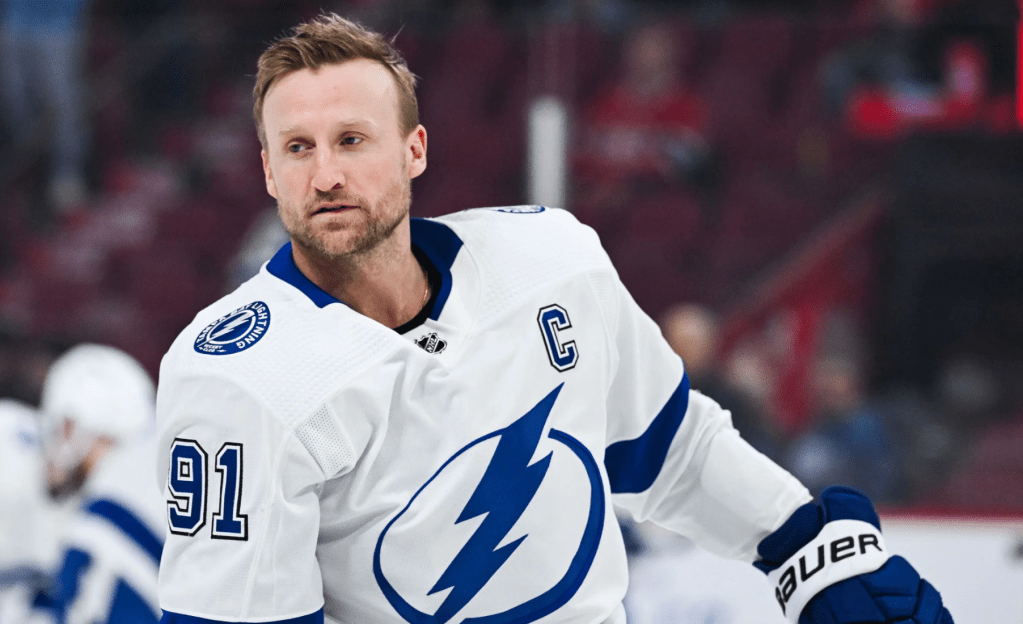
C/LW Steven Stamkos – 34 years old, 6’1” 194 lbs (UFA)
2023-24 Regular Season Stats: 79 GP, 40 G, 41 A
Player Overview:
Steven Stamkos is an average-sized offensive forward with an elite shot. Stamkos came up as a center, but he has mostly played left wing in recent years. Stamkos is known for his overpowering one-timer, which is a devastating weapon on the powerplay. He is a well-respected veteran leader who has served as Tampa Bay’s captain for the past decade. While he isn’t known for his physical play, he is not afraid of putting his body on the line to win a game. Stamkos’ unique combination of offensive skills, leadership abilities, and championship pedigree make him a highly desirable free agent target.
Player Analysis:
Stamkos was the first overall draft pick in 2008, and he has absolutely lived up to that pedigree. He has scored 555 goals in 1082 regular season games, along with 50 goals in 128 playoff games. He has been an elite goal scorer for his entire career, and even at age 34, he still managed to score 40 goals in 79 games. Stamkos was drafted to a rebuilding Tampa Bay team that needed his star power, and he has delivered. In 10 years as captain of the Lightning, Stamkos has made the Stanley Cup Finals four times, and won it twice. Age and injuries have caught up to Stamkos in recent years, limiting his overall impact on the ice, but his talent and work ethic still allow him to maintain a high level of play.
First, let’s look at the positives of Stamkos’ game. He can single-handedly improve a powerplay. Yes, he played alongside Nikita Kucherov, who did much of the playmaking and heavy lifting on the Tampa powerplay, but Stamkos’ presence on that unit gave Kucherov some space that he could work with. Stamkos’ ability to one-time the puck and get shots off quickly meant penalty killers had to keep his location in the backs of their minds. Stamkos finished the season with 19 goals and 20 assists on the powerplay. Those 19 goals were good enough for third in the NHL. Stamkos is also well above average in the faceoff dot where he won 56% of draws last season, making him one of the best in the league.
You may have noticed that I have yet to mention Stamkos’ play at even strength. Stamkos no longer drives offense at 5 on 5 as he once did, and that has made his defensive deficiencies look worse. The Lightning have a 49% shot share and a 48% expected goal share with Stamkos on the ice. While that doesn’t sound too bad out of context, it is important to note that these numbers are among the worst on the team. In fact, if you look at Stamkos’ impacts on his teammates, nearly every single player on the Lightning has a better expected goal share away from Stamkos than they do with him. The most extreme example is Stamkos’ most common linemate: Anthony Cirelli. In over 400 minutes together at even strength, the pair have controlled less than 44% of expected goals, whereas Cirelli’s expected goal share jumps to 56% away from Stamkos. Now there could be other factors at work here, but the fact that this is a common trend throughout the Tampa lineup indicates that Stamkos is having some kind of negative impact on his teammates at 5 on 5. Stamkos does bring value to his team, but there are absolutely some worrisome red flags in his game.
The Fit:
Stamkos brings multiple qualities that would improve the Ducks. The most obvious of which is his elite shot and finishing ability. Even though Stamkos’ impact at even strength has diminished in recent years, he can still put the puck in the back of net, and he would give a huge boost to the powerplay. The threat of his one-timer on the half wall on the powerplay will also open opportunities for the other members of his unit. Stamkos is also great on the faceoff dot, which would help players like Carlsson, McTavish, and Zegras. And it would also be useful on the powerplay to win initial possession more often.
Anaheim would also welcome his leadership abilities to help guide its new generation of young stars. Alex Killorn, Radko Gudas, and Ryan Strome are quality veteran leaders, but none of them have the prestige and respect that Stamkos has earned over his time in the NHL. Even though he isn’t in his prime, Stamkos would give the team an extra layer of legitimacy that they are missing. He can also relate to some of the young players who have unfortunately grown accustomed to losing in recent years, and he is living proof that it’s possible to dig your way out of such a hole. He has seen and been through just about everything in the NHL, and that experience would be invaluable to a team like Anaheim.
Stamkos is right-handed, but he prefers to play on the left wing, which is something the Ducks would have to work around. Stamkos’ greatest asset is his one-timer, which can only be properly utilized on the left side. The Ducks, as presently constructed, are deeper at left wing (Gauthier, Vatrano, Killorn, Zegras) than at right wing (Terry, Strome). Both Vatrano and Killorn can play on the right side, and if Stamkos were to join the team, at least one of them would have to move over there to fit him in. Stamkos has also been relatively poor at even strength in recent years, especially defensively. Given the Ducks young forward group, it would need to be carefully constructed to minimize Stamkos’ deficiencies, especially if they plan to pair him with one of Anaheim’s young centers. These considerations are far from dealbreakers, but they must be considered when building a lineup.
My Offer: 3 years, $7-8M per year
Stamkos wants to stay in Tampa Bay, but Tampa appears to be hesitant to use its remaining cap space on its aging star. It is difficult to picture Stamkos in another uniform, but as we get closer to free agency on July 1, it is becoming more likely. He is not the dominant offensive player he once was, but he still has great value on the powerplay and in the locker room as a respected veteran who has won it all. Ideally, I would try to get Stamkos to take a two-year contract, even if that means bumping up the salary to $9-10M per year. That number is almost certainly more than he will be worth, but the Ducks can afford it for the next two years. I would assume that Stamkos is pushing for a three-year (or maybe even a four-year) contract. With Stamkos’ age and injury history, I would not go beyond three years. We also don’t know what Stamkos would be looking for if he leaves Tampa Bay. Does he want another run at the Stanley Cup? Does he want a short-term, high salary deal to maximize his payday at the end of his career? Or does he want some security with a longer-term deal? We will find out soon enough.
Backup Options:
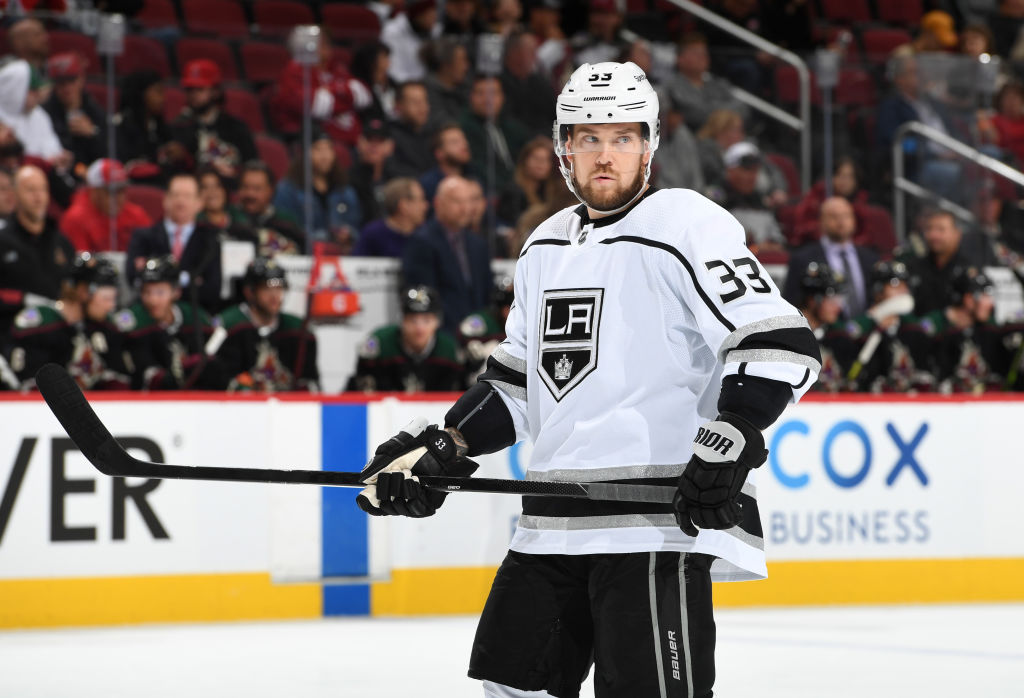
RW/LW Viktor Arvidsson – 31 years old, 5’9” 180 lbs (UFA)
2023-24 Regular Season Stats: 18 GP, 6 G, 9 A
Viktor Arvidsson is a small, skilled winger coming off a season where he missed 64 games due to injury. He has historically been a productive player in the regular season when he’s been in the lineup, but he has been plagued by injuries for most of his career, in part because of his size and playstyle.
Arvidsson is an underrated offensive player. He is a volume shooter, but he is also capable of making deft passes at even strength and on the powerplay. He can be a bit of a frustrating player to have on your team because he can sometimes try to get too cute, and he will also take some bad penalties. He is a solid complementary winger who can play on any of your top three lines.
If Verbeek is looking for an offensive boost, then Arvidsson would be a solid choice, especially considering the deal he will likely sign. With his injury history, Arvidsson’s stock is not that high, making him an excellent buy-low candidate for the Ducks. He will not be a savior, but he can add some offense to a team that desperately needs it.
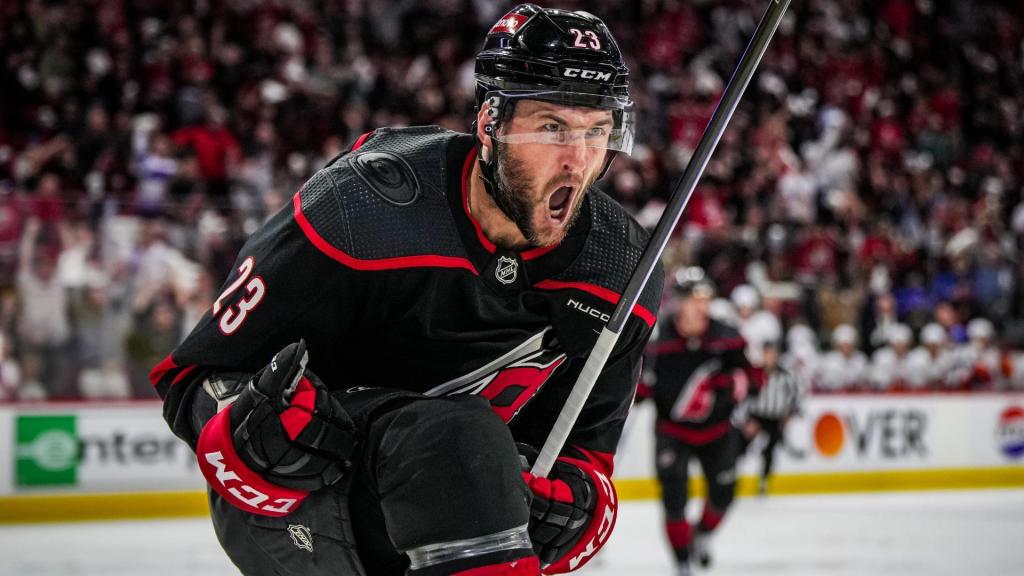
RW/LW Stefan Noesen – 31 years old, 6’1” 205 lbs (UFA)
2023-24 Regular Season Stats: 81 GP, 14 G, 23 A
Stefan Noesen is an average-sized, rugged winger who can be an asset on a powerplay. Ducks fan may remember Noesen as part of the return in the Bobby Ryan trade in 2013. Noesen unfortunately suffered a couple of serious injuries during his time with the Ducks, but he persevered and managed to score his first career goal with Anaheim before moving on. He has bounced around teams, both in the NHL and the AHL, but he has finally strung together two consecutive solid seasons with Carolina.
Noesen has never been particularly productive at even strength, but he has found success playing in front of the net on Carolina’s powerplay. His tenacity and strength allow him to win puck battles and knock in loose pucks close to the net. He is more of a third- or fourth-line player at even strength, but he adds value to a powerplay.
Noesen would slot in on the right side of a bottom six line on the Ducks. He would also fit on one of the Ducks powerplay units as a net-front presence, something the Ducks have been lacking in recent years. Noesen will be a relatively inexpensive player to sign, but he is likely looking to cash in after the two most productive seasons of his career, meaning he will probably go to the highest bidder. Noesen is a fine depth add, but don’t expect him to make a huge impact wherever he goes.
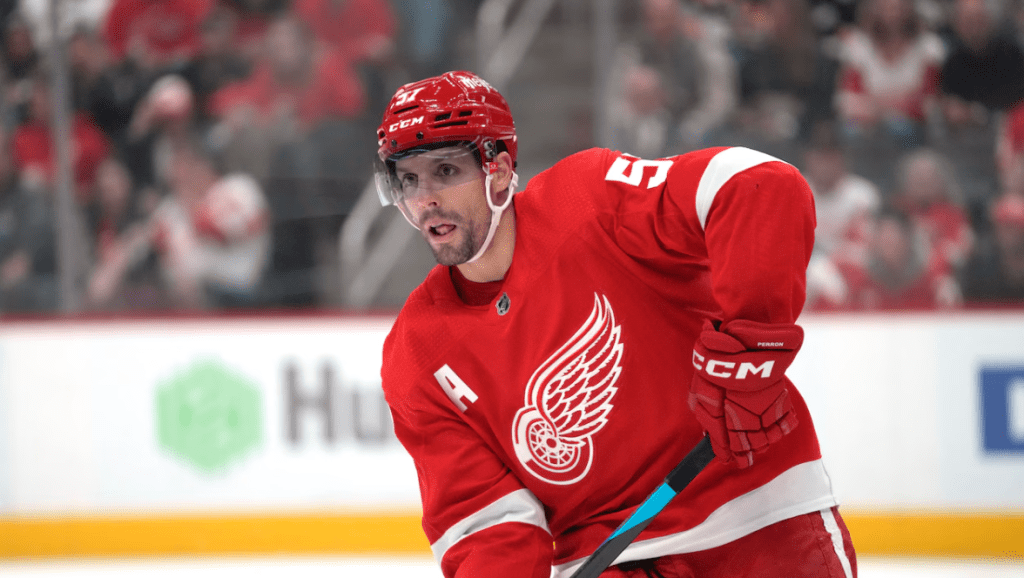
RW/LW David Perron – 36 years old, 6’0” 200 lbs (UFA)
2023-24 Regular Season Stats: 76 GP, 17 G, 30 A
David Perron is an average-sized, skilled forward near the end of his career. Perron played 28 regular season games and 7 playoff games for the Ducks in 2016. He was a great fit next to Ryan Getzlaf, but the Ducks chose not to retain him after the season ended. Perron has spent the last two seasons with the Detroit Red Wings as a fixture on their powerplay.
At this stage of his career, Perron is mainly a powerplay specialist. His vision, poise, and puck skills make him a dangerous player with the extra time and space on the man advantage. At even strength, however, Perron’s game has faltered in recent seasons. This past year saw Perron’s on-ice impacts fall off quite a bit. Almost every Red Wings player fared better without Perron than they did with him. He is currently best suited to a third line role with powerplay time.
It is possible that Perron could be a good fit with the Ducks, but it is a risk. He would need to be heavily sheltered at even strength, and you would have to hope he can find a spot on one of the Ducks’ powerplay units, but that is far from a guarantee since the Ducks will likely want to give powerplay time to some younger players. Perron’s next contract will not be expensive or long, but his presence could block a younger player from getting some extra ice time.
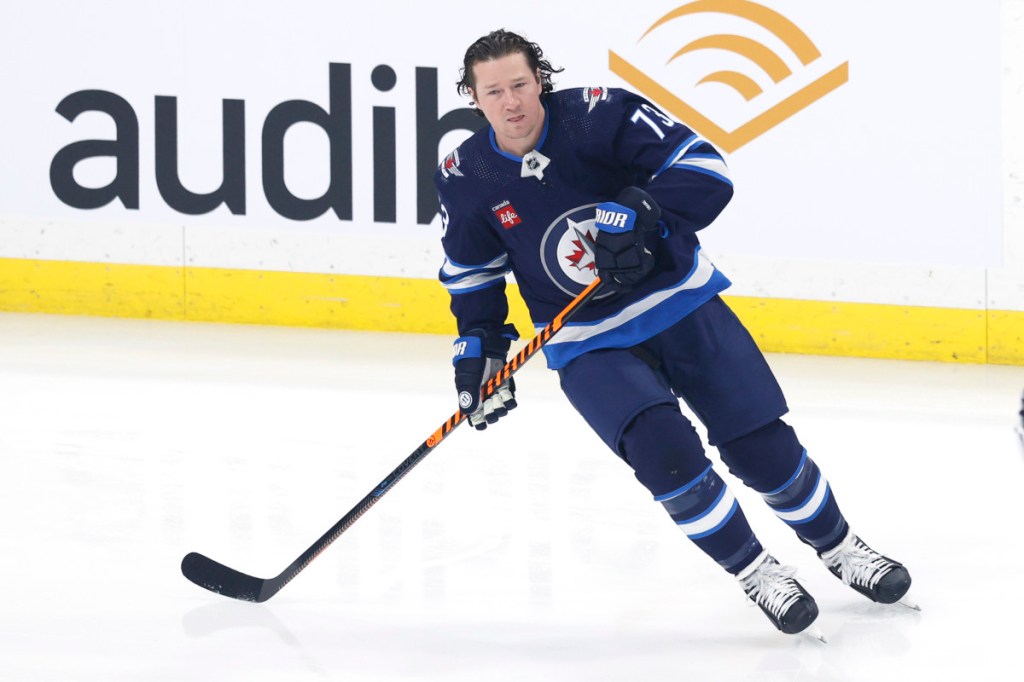
RW/LW Tyler Toffoli – 32 years old, 6’0” 197 lbs (UFA)
2023-24 Regular Season Stats: 79 GP, 33 G, 22 A
Tyler Toffoli is an average-sized scoring winger who has made a career out of being a secondary scorer on some good teams. Toffoli has bounced around in recent years, but not because he hasn’t been productive. In fact, these past two seasons have been Toffoli’s best goalscoring campaigns of his career. He is not fleet of foot, but he is a smart offensive player who knows where to go on the ice to score goals. His stock is relatively high, meaning he will be a popular target in free agency.
Toffoli is an effective complementary forward who loves to shoot the puck. Last season, he found great success playing with high-end playmaking forwards in Jack Huges and Nikolaj Ehlers. Toffoli will not be the player to skate the puck up the ice and make plays, but he will put himself in good position to capitalize on plays made by his linemates. Toffoli has also become an effective player on the powerplay in recent seasons. He is a solid winger who can play anywhere on the top three lines, as well as a top powerplay unit.
Toffoli would be a good fit next to one of the Ducks young playmaking centers and on the Ducks’ powerplay. After his recent seasons, he will be looking to cash in on what will likely be his last opportunity to secure a long-term contract. Toffoli spent most of his career with the Kings, so he is familiar with Southern California, but it will take a big contract to lure him back to the Golden State.
Honorable Mentions:

RW/LW Travis Konecny – 27 years old, 5’10” 175 lbs (1 yr, $5.5M AAV)
2023-24 Regular Season Stats: 76 GP, 33 G, 35 A
Travis Konecny is a personal favorite of mine and I think he would be perfect for this team, but the timing might not be right. Konecny is an undersized winger, but he plays a hard and feisty game. He profiles as a volume shooter with some underrated playmaking abilities. He plays both the powerplay and the penalty kill, and he even led the NHL with 6 shorthanded goals.
Konecny currently has one year left on his contract, and after the season he just had, it would take a lot to acquire him from Philadelphia, who seem to want to sign him to an extension soon. Not only would it take assets to acquire him, but if you want to extend him, he’s going to require a substantial raise from the $5.5M he’s currently making. I don’t think it’s the right time to spend quality assets on a short-term deal, but if Konecny makes it to free agency next offseason, he will be at the top of my list.

C/RW/LW Patrik Laine – 26 years old, 6’5” 206 lbs (2 yrs, $8.7M AAV, 10 team NTC)
2023-24 Regular Season Stats: 18 GP, 6 G, 3 A
Patrik Laine is reportedly looking for a fresh start, meaning Columbus is most likely going to trade him before the start of next season.
Laine is a fascinating player. He has one of the best shots in the game, he’s 6’5”, and he has some impressive puck skills. However, there are a lot of question marks around him. His defensive game and overall effort have been called out in recent seasons, he has been affected by numerous injuries, and he has worn out his welcome with two different teams already.
Laine has a relatively high salary at $8.7M for the next two seasons. Given that high number, he likely would not require a large return in a trade, but it is a lot of money to take on for such a risky player. He also has a 10-team no trade clause, meaning there is a chance that he might not even accept a trade to Anaheim. I do not think he’s the right target for Anaheim, but, assuming the cost is minimal, it would be an interesting gamble on an exciting player.
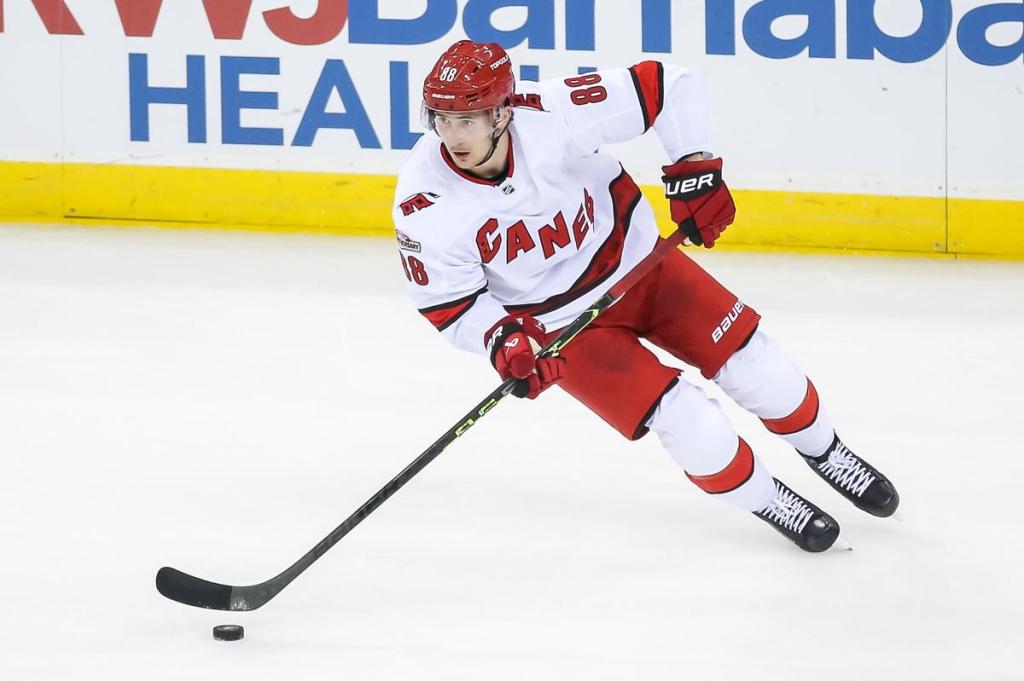
C/RW Martin Necas – 25 years old, 6’2” 189 lbs (RFA w/ Arbitration Rights)
2023-24 Regular Season Stats: 77 GP, 24 G, 29 A
All signs point to the Carolina Hurricanes trading Martin Necas this offseason. For whatever reason, there appears to be some tension between the two parties and each of them seem to want to move on. Necas is a restricted free agent with arbitration rights, meaning that even if his new team cannot work out a long-term contract with Necas, they will still be able to retain him for at least one more season.
Necas is a rangy winger who plays like a center. There have even been reports that part of the reason he wants out of Carolina is that he wants to play center, but Carolina prefers him as a winger. He loves carrying the puck off the ice and using his puck skills to dance through defensemen. For those of you that haven’t watched him, I like to think of Necas as a more athletic version of Troy Terry. Like Terry, Necas will be looking for a long-term contract in the range of 7 years with a salary around $7M per year.
From a Ducks’ perspective, while Necas is a talented offensive player, he offers more of what the Ducks already have rather than giving them any new dimensions. For that reason, I would be hesitant on targeting Necas, especially given the likely high asset cost and expensive long-term contract that he is searching for.

RW Sam Reinhart – 28 years old, 6’1” 194 lbs (UFA)
2023-24 Regular Season Stats: 82 GP, 57 G, 37 A
Coming off a career high 57 goals, Sam Reinhart is the premier unrestricted free agent this offseason. I would personally be surprised if Florida does not re-sign before free agency begins, but it is possible that Reinhart tests the market to see how much money gets thrown his way.
Reinhart is a two-way forward with a knack for scoring on the powerplay. Last season, he led the league with 27 powerplay goals and he was also one of Florida’s best penalty killers, scoring 5 shorthanded goals (tied for second most in the NHL). He is a reliable player in all areas of the ice, making him a great fit anywhere in the lineup.
After his prolific season, Reinhart is going to be paid a lot of money. Florida has a significant advantage in their ability to offer him the contract he wants. Not only are they the only team that can offer him an eighth year on a long-term deal, but Florida’s non-existent state income tax means Anaheim would have to offer more money than Florida just to make Reinhart’s take home pay even. On top of that Reinhart is already familiar with Florida, and the team is one of the best in the NHL, making the Stanley Cup Final in back-to-back seasons. If the Panthers offered Reinhart $9M per year for 8 years, how much would the Ducks have to offer to match it? With a 7-year deal as the ceiling, the Ducks would likely have to offer something in the range of $11M per season to be competitive. I think Reinhart would be a great fit in Anaheim, but the contract offer needed to secure his services will be far too large to make sense.
Ranking the Options:
There are a lot of factors that go into how these players fit the Anaheim Ducks: playstyle, age, contract, health, etc. Based off what we know, this is how I would rank the primary and secondary options I have listed above:
- Jonathan Marchessault
- Loves to shoot
- Strong offensive IQ
- Age will limit contract length
- Successful playoff performer
- Elias Lindholm
- Responsible forward with offensive upside
- Can shelter young players
- Wins faceoffs
- Helps special teams
- Contract demands could be a concern
- Steven Stamkos
- Lethal one-timer
- Excellent on the powerplay
- Respected leader
- Worrisome at even strength
- Health concerns
- Viktor Arvidsson
- Tenacious offensive player
- Skilled passer
- Volume shooter
- Long injury history
- Tyler Toffoli
- Consistent goal scorer
- Boost on the powerplay
- Not a great skater
- David Perron
- Excellent on the powerplay
- Feisty player
- Past his prime
- Downward trend at even strength
- Stefan Noesen
- Plays net-front on the powerplay
- Willing to go to hard areas of the ice
- Not much upside at even strength

 All Mighty Hockey Talk
Leave a reply to andraellingson Cancel reply